Wednesday, November 13, 2013

Assassin's Creed: Revelations


In light of the recent release of Assassin's Creed IV (which is actually the sixth installment in the series) I thought I would set aside some time and talk about Revelations. Why, you ask? Because Assassin's Creed: Revelations was easily the worst installment in the series so far. As with every Assassin's Creed game, that opinion is far from being across the board; there are some aggregates who called Revelations the best AC game thus far, but I think most people would agree, this was a low point for the series.
Now, don't get me wrong. I love Assassin's Creed. Nobody was more ready for Revelations than I was. I preordered it, I had the poster, I was obsessed with the trailer and watched it probably a dozen times along with the various other gameplay showcases and such, I read all of the news covering it and I even went back and renewed some of the experiences from the older games just so everything was all fresh in my mind. I really wanted to love this game when I put the disc into my console on November 15th, 2011.
What I got was a bit disappointing.


First and foremost were the graphics. Now, I'm not one to get all uppity over such a thing, most of my favorite games are featured on older consoles. I know that fancy graphics do not a great game make but did anyone else watch the release trailer? Was there any doubt that this game would look stunning beyond what any other game had previously accomplished? Ezio does not look like the badass assassin master that we saw with a noose around his neck in the trailer, he looks... homely. I can't quite place it but they messed up his face somehow.
Next we have the setting. Before I played the game, I thought that Constantinople would be a really great city for Ubisoft to work their creative magic. It seemed ripe for the assassinating. When I got there, however, I realized it wasn't quite as fitting as I'd originally thought it would be. It was crowded, shrouded and all very much the same looking. It made me miss the clear openness of the previous installments or the many completely unique structures and city squares that those worlds were littered with. I found myself becoming very board very quickly with this dull landscape that you'd expect would be just the opposite. And sure, it's vibrant at first but after playing for a few hours, you'll know what I mean.
The next major issue is the equipment used within the game. The hookblade was a big selling point for this installment and it was supposed to be this awesome new tool that would reshape the way you play the game. However, if you've played AC III, you know that the hookblade isn't in that game at all so obviously, this did not happen. The hookblade could be utilized in many ways to assist in combat, escape, climbing or just getting around. Despite all of that, I found that I barely used the damn thing. Every chance I had the opportunity to use the mechanic, I either didn't think of it, found it was too difficult to go out of my way to pull off or I simply didn't require it. For instance, you can do this neat escape maneuver that does a flip over a stationary guard while you maintain your speed in a sprint but instead of doing that, I found it much easier to just run around the guard, that way there's no chance of me fucking up the timed button pressing. The only thing I regularly used it for was for zip-lining which was, admittedly, really cool.
Another equipment inclusion would be that of the reimagined bomb system. Whereas in the old games, you had a bunch of smoke bombs that could be used tactically to either make an opening or stall for an escape, in Revelations you'd be able to construct your own bombs and tailor them for use in various situations. This is done by combining a plethora ingredients that you can acquire throughout the world be it from a locked treasure chest or off of a dead guard's body. This is a neat idea and I can see where they were going with it as it encourages the player to explore and think tactically. Depending on what ingredients you use you can control the size of the explosion, method of detonation and the effect of the bomb. For instance, one bomb could just kill while one is a smoke bomb while still another is a blood bomb that creates panic. At first I got all enraptured in this idea and thought it was great until I realized something: they're all pretty much the same. Yep. The only real difference between bombs is that you have ones that kill and ones that stall. Size? Always go maximum, no reason not to. As for the detonation, don't bother with anything that's not explosion on impact after being thrown. I found that even after all of my meticulous planning I still had a very difficult time getting guards to walk across my tripwire bombs and even then it wasn't worth much when I could easily just kill him myself and be done with it.

Pictured: Being done with it.
When I play through Assassin's Creed games, I don't take any part of it for granted. I do everything from even the pettiest of side quests to collecting all of those elusive feathers and achievements. You know what's fun? Putting effort into obtaining money and then purchasing land in order to build a strong tax base in order to buy more equipment as well as more land and then being satisfied as you reap your rewards. You know what isn't fun? Finishing that only to have someone erase your hard work before telling you to do it all again. This is what I faced with Revelations which tasked me with buying all kinds of land and properties in the exact same manner that Brotherhood had me do. At least they upgraded and modified the process from AC II to Brotherhood but here it's just copied and pasted. I didn't even give it the time on my playthrough and to this day, it remains unfinished. Who wants to do all that shit twice?
Another thing that remains begrudgingly the same would be the Borgia tower missions. AC Brotherhood introduced this feature wherein if you systematically take out the Templar-backed Borgia fortresses, you could gain land and footholds towards taking Rome for the Assassins. Revelations lazily recycles this idea and by now, it's just tedious.
What's even worse is the addition of the tower defense mini-game which received ubiquitous disapproval. In this mini-game which occurs randomly during gameplay, Ezio must command his assassins to defend one of the multiple towers that you've won from the assailing Templars. You do this by positioning various squads at different vantage points. This is fun all of one time, after which it's a drag and you'll wish the Templars could just take the stupid tower and coexist. Furthermore, this completely dissolves the whole idea of the enduring secret war between the Assassins and Templars that is a (if not the) defining point in the story that sets up the universe. All of this sniping and bombing and exploding and marching and armies just kills it completely.

Ezio signals commands to his Assassins during a high profile tower invasion.

But what's probably the biggest complaint I have for this game is your invincibility. I could probably count on two hands the number of times I died during my playthrough of Revelations (not including the times I deliberately committed suicide). With the first AC game, you were fairly weak and charging head on into a big group of guards was a pretty dumb move, at least in the beginning of the game. The second game was much the same way and Brotherhood added in the assassin follower mechanic wherein, you can summon your underlings to take out menial targets for you. This was an interesting and useful addition to the game that spared you the trouble of going way out of your way to kill everyone and probably saved you more than once.
But in Revelations it's flat out abused. In Brotherhood, it takes awhile before you accumulate enough assassins to pull these stunts off but in Revelations you have it really early on. On the other hand, you don't really need the assassins because you're already so armed to the teeth with bombs, swords, guns, crossbows and a whole shit load of other things to keep any foe at bay. Once you figure out the fighting mechanics, nothing can touch you and the entire stealth feature goes out the window. Why even bother sneaking or trying to run away when you could easily just kill your way through anything? I found that I never had to even think about something before I just dove right in. I could use eagle vision and plan out a complicated attack but there's simply no reason to do so.
Well, the game does add in the full-synchronization feature from the other games, which is basically a bonus objective to complete in each mission (e.g. don't be detected, don't take damage) but I hate it just as much now as I did then. I almost always make an attempt for these bonus points just out of a sense of obligation but they take a lot of the fun of the game away from the player. If it's telling you exactly how it thinks you should approach the situation then whatever happened to the whole 'choose your own methods' thing? Furthermore, just trying for these frustratingly difficult goals often had me throwing my controller in anger. Long story short, the normal game is too easy but the full-synchronization is just too fucking hard.


But even after all of that, Assassin's Creed: Revelations is not that bad a game. I loved that they brought Altaïr back and after all those years, it was nice to get some closure to his story. However it was admittedly pretty absurd that you were sitting in your living room controlling Desmond who's in the Animus controlling Ezio who is controlling Altaïr... still however a great addition and big selling point for this game.
After all, the game is called Revelations and Ubisoft definitely made good on that. They cleared up a lot of the questions that had been floating around since the end of the first game. As far the story aspect goes, this game satisfies and excels. Interestingly, I didn't find the plot-twist at the end to be that, well... twisty. The reason being is not by any fault of the game by any means but rather because of an intricate side-quest in AC II that tasked the player with tracking down numerous runes and symbols hidden in out-of-the-way, otherwise unremarkable places. These runes are invisible unless you view them through eagle-vision, making them all the more obscure. After finding one, you unlock a challenging puzzle mini-game and upon completing that, you'll be granted a few fractions of a second of a clip. When you complete the entire clip, the game rewards you with something that makes a huge allusion to what is eventually explained at the end of Revelations. After I took many hours to laboriously track these down and having months to think about and hypothesize about the clip, I was able to arrive at a simplified version of the conclusion we're treated with in Revelations.
One of the reasons I love this series is because you can go and do things like that and to me, that just adds so much intricacy to the game. That they had this whole elaborate puzzle that they must have known only a handful of people would figure out.


On the other hand, the online multiplayer is also a very rewarding distraction. For Revelations, they took the existing formula they created for Brotherhood and innovated upon it, expanding it to accommodate more game-types and to appeal to more styles. I wish that the techniques utilized online were as prevalent in the story mode. Online, if you go high profile by sprinting everywhere and jumping around, you're doomed. The game rewards creative and stealthy approaches to your kills whereas in the single player, I found that there were multiple times where I simply had no choice but to engage in a head-on assault which would've practically been blasphemy if it were in the first or second game.
I don't hate Assassin's Creed: Revelations, not by a long shot. It's still a good game however, I wouldn't recommend it to anyone unless you're involved with playing through the series, in which case, you can't afford to miss it as it's integral to the lore of the game. It's still full of great mechanics and it's built atop an already awesome series but it's terribly flawed. The problem with taking a leap and going out on a limb as the Assassin's Creed games often do is that some times, the innovations just don't work out. However, Revelations was a combination of this and the exact opposite problem. Not changing enough. AC II was a massive step above the original and Brotherhood took that formula and perfected it. After two games of that, by the time I got to Revelations, I was ready for change that didn't come. They innovated in places that didn't call for it and left things that should have been amended. Overall, not a bad game but definitely below the standard that I hold for this exemplary series.

7/10 - Good formula. Flawed execution.

Tuesday, November 12, 2013

Top 10 Black Metal Logos

One of the major staples of black metal, the leading paradigm of bad stereotypes and concerned mothers in music, is their flamboyant usage of often illegible artwork that they display as their logo. These artworks generally include the band's name and are often quite impressive and intricate works. Today I'll be counting down my top ten and believe me, it was difficult to choose out of the many runners up.

10. Xasthur


This depressive American one-man-band is known for the usage of topics of suicide, despair and other comforting emotions as musical basis. The name Xasthur is a combonation of the name Xastur and Xenaoth, two spirits from some pagan thing or another. Another fun tidbit, the original band name was going to be Xasthuriath but it was shortened to just Xasthur in 1997. But fuck, that logo, man. It's like an explosion of angst.

9. Anataeus


This one has all kinds of shit going on in it. Look, for instance, to the top of the logo, you should be able to make out a 6-6-6. Anataeus is a classic, straight-up satanist band that is every bit as cliche as you've heard black metal is. That's all fine and dandy for some but the rhetoric is a bit tired and it's good to see the genre taking new strides in the past decade.

8. Wolves In The Throne Room


Good fucking luck reading that one. Every time I think I see the words lining up, they always manage to disappear on me. WITTR is a black metal duo of brothers who've been around since 2004. They fancy themselves with subjects such as mysticism and the natural world which gives them a less angry vibe than a lot of other black metal bands. I like that.

7. Agalloch


Still one of my all-time favorite metal bands, the Oregon band, Agalloch, has been going strong since 1997 and hopefully won't be stopping any time soon. Delivering music that is both calming as well as hellish seems impossible but is pulled off flawlessly by the foursome. I like that the logo looks wooden and gnarled like dead trees.

6. Nhor


And speaking of bands that are just as serene as they are deathy, the one-man-artist, who simply goes by Nhor, is my personal favorite ambient black metal band and is right up there with Agalloch for all-time best black metal. Nhor has all his artwork done by an artist who goes by Sin-Eater. Sin-Eater designs the many monochromatic and bleak as well as beautiful and inspiring works that accompany Nhor's music. It's a great compliment considering Nhor's heavy emphasis on nature within his works.

5. Ayat


This one has clearly crossed the line between trying to make out the words and simply trying to make out any letters at all. The band is called Ayat and yes, if you look hard enough, the letters are all there. This Lebanese, straight-black band pretty much just hates all of humanity. Fun stuff.

4. Aifur


This is one of those bands that obnoxiously refer to themselves as nihilists which is basically a fancy word for atheist. If you're not a theist you're an atheist, you don't have to pretty it all up. Regardless, just look at that fucking logo. The way the roots make up the letters is just awesome.

3. Exiled From Light


Now that is what I call a fucking black metal band. This is complete with a forest of long, gnarled tendrils; dark, silhouetted birds; a callous sliver of a shrouded moon and ominous, stygian shadows. Another lone artist, this guy likes to refer to himself as Mort... He should hang out with Gort, the giant robot cyclops from The Day The Earth Stood Still.

2. Forestfather


Yes. Here we can see the obscure, international, atmospheric/folk metal band, Forestfather, taking the formula from Exiled From Light and perfecting it. While it's true there isn't any crescent moons involved, the way the words form a tree, complete with crows alighting upon it's branches; the way the letters are wispy and include tiny details such as the dozens upon dozens of minuscule branches and twigs reaching off of it... this logo is just beautiful. Bravo.
So what could possibly beat this one?

1. Coldworld


I'm not really sure why, but I really love this one. It's so simple but at the same time, imposing. Coldworld is yet another one-man project that has released two albums since 2006. The logo is minimalist in black metal terms. It's design perfectly compliments the gray, austerity of it's artworks. Truly awesome design, well-done.

Runners up:

Unsurprisingly, there were several bands who didn't quite make the cut, however, I'd like to pay them homage as well.


Korgonthurus


Darkthrone


Addaura


Bosque                                                     Triste


Senthil


October Falls


Woods of Pestilence                                                        Dark Fortress


Austere

Those were just my top favorites. This was a hard list to make because even discluding the logos above, there are dozens of other bands I could've chosen. Did I miss any good ones?

Wednesday, October 30, 2013

Terrorvision


It's Halloween and I haven't been doing nearly enough horror related articles, so y'know what? Here's an obscure one for you.
Terrorvision is the film that future generations will use as the sole basis of judgement of the decade known as the 80's. Every inch of the film screams it with a fucking megaphone. You have your egregiously cliche adolescent stereotypes such as the fashion explosion of a teenage girl and her "metal" head boyfriend, and the younger boy who's into monsters and horror movies. These are our three protagonists that accompany us through this quirkiness. Alongside them are the two BDSM/sex obsessed parents who look goofier than they sound and the over-passionate veteran grandfather who brazenly brandishes his many medals across his chest for all to see.

However the over-animated cast of this film is merely the icing on the cake. The plot begins when the irate father is struggling with their satellite dish, trying to gain free access to the pay-per-view channels while the unhelpful repairman stands idly by. It isn't long before malfunctions occur and the satellite inadvertently intercepts the broken up particles of that horrific abortion of a movie monster that you see below. He vaguely reminds of the singing poo guy from Conker's Bad Fur Day but whatever, this predated that by multiple years regardless and, in all honesty, I've never seen movie monster quite like this guy. He's hilarious looking and I love the way he's always got a weird crooked smile.


So apparently, this sort of creature is kept as a pet from an alien planet however from time to time, the bastards mutate into whatever that thing is. Whenever that happens, the aliens callously fire the poo monster's molecules off into space and apparently this comes at the cost of a very, very slight chance of those molecules getting transmitted through human television sets causing them to reassemble within our unsuspecting living rooms.
So the whole plot centers around trying to deal with this grinning pile of fuck. After it gluttonously gorges itself on the parents and the couple they invited over to get freaky with, it's up to the kids to figure out what the hell to do with it. They try calling the generously endowed, horror-host, Medusa but she ends up being no help at all as she unmindfully dismisses their pleads for help with a scoff.

Good God.

So they take it upon themselves to try and house-train the thing. It happens to be quite accustomed to liquifying it's victims and then slurping up their goop. They try to feed it people food and lay out all sorts of processed goods in a pile atop a table but it's to no avail as the monster throws a fit and tosses everything aside. They try teaching it to talk but all he manages to do is sneeze all over them.
I neglected to mention that all the while, the characters have been going about ignorant of the alien broadcasting across their television screens who is desperately trying to warn them all about the monster. He instructs them to turn off all of their TV sets for at least 200 years but naturally everyone says, "yeah, fuck that," and they go right on TV watching regardless. Eventually the alien himself transports himself through the TV and into the living room in order to put to rest what he refers to as an inconvenience and humorously notes that he "might lose his job over this." The alien looks hilariously cliche and is something straight out of a 50's b-movie. He totes a comic-looking laser gun and wears a goofy fishbowl helmet that reminds me of the Robot Monster from the movie Robot Monster.


And speaking of Robot Monster, there's a clip in this very movie where the characters are watching Robot Monster. That's pretty funny to me but it's far from being the only classic horror film that can be seen on the television screen. In one scene they're watching 1000000 B.C. and in another scene they're watching The Giant (fucking) Claw. The portion of the movie spent watching the television is generous but it's a fun touch and I like trying to guess at what's on the screen.
But anyway, simply out of her own random interest, Medusa decides to show up at their house only to find a lot of strange goo and a big mess everywhere. She presumably arrives at the conclusion that what the boy was telling her over the phone might actually be real. So who could blame her for taking matters into her own hands when she sees this otherworldly extraterrestrial waving around a futuristic weapon? She promptly puts a hefty crack across his dome the alien's head pulls a Prometheus and explodes all over the inside of his helmet.
The setting of the house is so bizarre just in of itself. There's strange, artful porn all over the walls, roman statues and the color schemes and layout seem to make no logical sense whatsoever. It's all around just such an odd movie. One of the things I think is really strange is the backyard set. Past what looks like a small jungle of ferns and other various plants is, well... nothing. It's just an infinite blue void; no hills, no roads, houses or anything.
And y'know what, this needs to be said but I can't find a place for it in the review. There's a random moment where Medusa is talking and the camera just zooms in on her cleavage until it fills up the whole screen (didn't take much zooming). I don't know what that's about.


But for all of the frames of this movie I could show you, or all the random bits and details I could pick out, I couldn't ever do it any justice. It's something that needs to be seen to really be believed. I can't describe to you how the poo pile moves around and kills people but it's a delight to behold. I actually would recommend this movie because it's just good ol' cheesy stuff and it's quite funny in it's own right. I found my self laughing aloud more times than I could count while watching it. If you want something funny, quirky, self-aware and kinda out-there, Terrorvision is the film for you.

7.5/10 - Funny and different.

Sunday, October 20, 2013

Gravity


Gravity is a film that is every bit as breathtaking as it sounds. It begins with a brief but effective pre-title sequence where a few sentences display upon the screen that say something to the effect of, "In Space, temperature fluctuates from x to y. There is no sound, no pressure, no air. It is completely uninhabitable." It's a great way to start a movie and it instills in us a sense of foreboding.
This film prides itself on it's incredibly long, continuous shots. It's impressive to be able to do something like that, and the camera moves all around from each spacewalking character in order to keep the audience from getting bored.
This of course would impossible as we're too busy feasting our eyes on the phenomenal cinematography. For movie-goers who enjoy a heavy emphasis on visual quality, Gravity is the pièce de résistance. Every single second of this film is jaw-droppingly gorgeous. From the massive still shots of the rotating earth, to the exquisite detail of the spaceship interior, every inch of Gravity is a sight to behold. Seriously, it can't even be emphasized it enough, visually, Gravity is easily one of the best-looking and most beautiful films in existence.


The cinematography is beyond impressive. The camera flawlessly glides about the set and it turns and rotates unpredictably which, at times, is a sickening effect but it effectively captures the sensation of zero gravity.
As far as the plot goes, it's very simple. George Clooney plays an experienced astronaut who's carrying out his last mission before retirement, while Sandra Bullock is just the opposite, a doctor on her very first job in space. It isn't long before Houston detects a deadly barrage of satellite debris heading straight for them. Their evasive measures fail catastrophically and the station they're inhabiting is severely damaged. The only survivors are George and Sandra and they now find themselves stranded 30,000 kilometers above the earth.


One of the things that make this film such an ethereal experience is that it's shaped with minimalism in mind. This is clearly discernible from the poster which depicts a tiny astronaut floating in an endless black void and even the short one word title. While Gravity certainly takes no moment for granted, it manages to maintain that style. There aren't many actors and there isn't always a lot going on during every moment. The movie is also full of distant shots that dwarf the actors against the brilliant horizon.
It seemed that throughout the film, the air would be sucked right out of the theatre as every audience member found themselves holding their breath. As the actors scramble to grab onto any nearby object to save themselves from soaring out into deep space, or as they desperately figure out how to navigate the skies, we as an audience feel like we're right there with them and it's downright, edge-of-your-seat thrilling.
But Gravity goes a step further and goes for a more emotional touch. We slowly learn about the characters little by little and Sandra tells a pretty heart-wrenching story about her daughter who passed away not very long prior. What it ultimately comes down to is finding the will to live.


Unfortunately, Gravity has received much backlash from audiences who choose to pick it apart and point out every minor scientific inaccuracy. It's very infuriating that this topic must be addressed yet again and it's simply beating a dead horse by now. Compared to the standard science-fiction film, Gravity seems genuinely real. There wasn't a single moment of outright, brazen unrealism and so Gravity is pardoned. If audacious fiction is distracting to the movie, that's where the line is drawn but in Gravity, this is far from being the case. Try to enjoy a film for what it is.
Gravity is an exhilarating, dazzling, beautiful blast of fresh air. There aren't too many films quite like it. I highly recommend seeing it before it goes out of theatres because seeing there is a wholly different experience.


9.5/10 - Don't miss it.

Law Abiding Citizen


This was another article that I submitted to my class. Sorry about this, guys, but again, I've been really busy with classes and such all month long. I'll try to put more time back into the site soon though. For now, enjoy this.


A thriller is a film that relies mainly on suspense and anticipation to draw in its audience. With all of the attention-grabbing, explosion montages that are dumping out of Tinseltown on what seems to be a daily basis, it’s relieving to watch a film that utilizes genuine plot twisting as it’s primary ingredient. Among every one of those, once in a great while, a film is made that redefines the genre; 2009 saw the release of Law Abiding Citizen, which did just that.
Law Abiding Citizen begins with a very disturbing scene during which the main character, Clyde, who is played by Gerard Butler, loses both his wife and daughter at the hands of two intruders, named Ames and Darby, who seem to have haphazardly selected Clyde’s house for thieving. Both criminals are eventually tried in court where prosecutor, Nick Rice, played by Jamie Foxx, is lacking the necessary hard evidence to secure a solid conviction of both offenders. Rather than put his conviction rate at risk, he strikes up a deal with Darby wherein Darby must plead guilty for crimes that would garner a considerably lesser sentence in exchange for testifying against Ames. As a result, ten years down the road, Ames is on death row while Darby’s sentence is up, despite the fact that Darby was the real killer while Ames merely tagged along. What at first appears to be Clyde’s plot for revenge is soon found to be deceptively simple as it unwinds into small-scale war against the entire American judicial system.
Law Abiding Citizen never tells you who to root for. In the beginning of the film, most audience members assume that Clyde is the good guy. At first he seems as though he may be our heartbroken hero and/or vengeful vigilante when he takes the law into his own hands by arranging the brutally shocking deaths of both Ames and Darby. However, Clyde doesn’t stop there and he carries a personal vendetta against everyone involved with the case, including the system itself and ultimately intends to bring the entire thing down to it’s knees.

What makes this film stand out is it’s remarkable ability to keep the audience guessing. Law Abiding Citizen hardly gives its audience a moment to breathe as it hurtles through it’s complex development. Nothing that Clyde ever does seems to make immediate sense; he’s not a gun-slinging, action star. Rather, he relies on arranging the deaths of his enemies in such a way that he may never even be in the same room as them. He’s a tactician and nothing happens unless he wants it to happen. This further heightens the suspense knowing that death could come at any time for these characters and having to wonder if they’re making intelligent moves or if they’re just playing the part in Clyde’s convoluted game.
The acting in this film, namely that of Gerard Butler, is satisfying to say the least. Butler takes it above and beyond and delivers a performance that’s versatile in of itself. In one scene he’s grieving, heartbroken and pitiful  while in the next he’s intense, dark and sinister. Overall, it’s a great example of incredible acting ability that is just not commonly seen in everyday cinema. The remaining cast is pleasing as well, but no one truly stands out as Butler does.
Classifying this film as a specific genre can be a formidable task. Is it a crime movie? A political thriller? Just a story of revenge? Law Abiding Citizen can accurately be classified as all of the above. Beneath it’s aphotic tale of vengeance lies a deeper message. It asks its audience, what is true justice? It’s nearly parody of our judiciary world as the ones who are meant to uphold the law must learn to break it in order to save lives. It is in this way that Law Abiding Citizen gives the viewer something to chew on even after the credits have stopped scrolling and the silver screen has faded to black.


This is a prime example of an underrated film. Law Abiding Citizen is one of the best thrillers to have been made since The Rear Window and it deserves it’s recognition for that. It’s intelligent, suspenseful, unpredictable and it keeps you on your toes. With all of your run-of-the-mill shoot-em-ups that is Hollywood is gladly using to pollute cinema, with it’s gritty realism and controversial message, Law Abiding Citizen is defined. It doesn’t stop at just “thriller” but rather it is a thriller that is garnished perfectly with drama, intrigue and uniqueness making it a film that no one should miss.

Friday, October 4, 2013

Revisited: The Grey

Hey readers, I formally apologize for not posting any content for the last month. I was involved in an accident which landed me in the hospital and got me stuck in a cast for three and a half months and on top of that, I've been very busy with school and such and I simply haven't had time to write here or even go to the movies.
That being said, here's an article that I wrote for a journalism class that I'm taking. The teacher I submitted it to said that it was one of the best papers he's ever seen from a student so, yeah, enjoy it and please excuse the lack of sarcastic tone, as this was more of a formal review.


There are some films that take the same old, tired formula of movie-making, reskin it and call it a new thing and there are other films which seek to create something new. The Grey is the latter of these types.
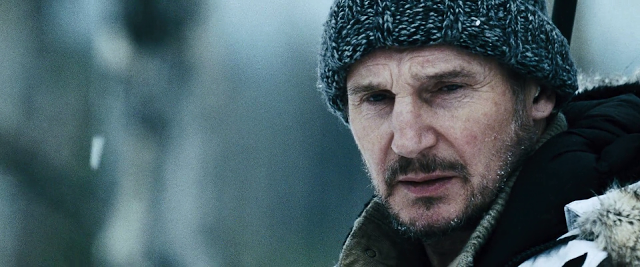
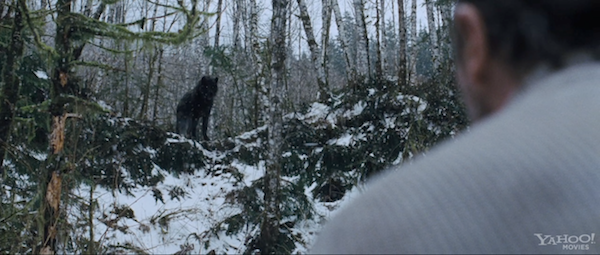
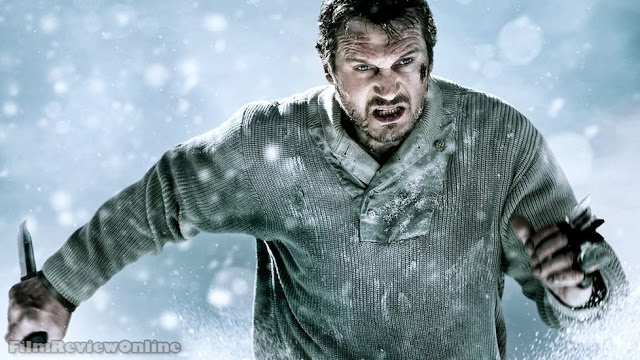
The 2011 film, The Grey stars Liam Neeson and is about a small group of survivors trying to stay alive after a plane crash in the dead of Alaskan winter. The handful of men finds their situation to be increasingly dire as they realize that they’re being hunted by a pack of highly intelligent and territorial wolves.
While the rest of the cast is a bit dull, Liam Neeson does a phenomenal job at acting out the film’s emotionally distraught protagonist who is struggling to cope with the (implied) death of his wife. In the very first scene, he attempts suicide but is interrupted and loses his nerve. Over the course of the movie, he acts out some impressively dramatic moments that can be heart wrenching to watch such as in one scene where he fails to rescue a drowning man and the audience can really feel a sense of agony over the situation largely thanks to the convincing acting.


Despite the general blandness of the bulk of the supporting cast, this film does not take death lightly. Whereas in most films, characters are simply picked off and are hardly spared a moment’s remorse from the crowd members, here every death is an emotional undertaking. The Grey forces the audience to feel for every character and one of the ways it does this is through it’s remarkable ability to illustrate a situation in a way where it’s easy to insert yourself into the film.
The best example of this, and what is likely the most poignant scene in the movie, would be during a scene wherein one of the survivors, who has sustained a substantially damaging leg wound, decides that he’s gone far enough and sits down never to move again. The sequence is painted in such a way that it’s easy to put yourself into it. The feeling of sweat and humidity building up underneath your heavy winter coat, the exhaustion burning through your legs. Every step you take you’re trying to convince yourself to only walk but a few more steps, the sense of dread as the gap between you and your party-members becomes wider and wider. This scene goes on for several minutes before they arrive at the conclusion to leave the man to die as per his own request. The tragic process of simply losing the will to live is captured amazingly well during this sequence right down to a final lingering shot of this man just sitting there, waiting for death. It lets the audience fully grasp the impact of what’s just occurred, reminds them that this is not a fairy tale where everyone lives happily ever after and it lets the man ponder over whether he made the proper decision.


The film is accented with a fantastic score as well as unique and creative cinematography. What is overall a standout and impressive feat of cinema is belittled by the looming fact that the wolves depicted in the film are unrealistic. Audiences simply cannot buy into this movie due to that one absurd detail. Years of prior study shows that The Grey is anything but an accurate showcasing of wolves in action and for some reason, this is grounds to debunk the film in it’s entirety.
What does that say about modern audiences and the future of cinema? Today’s audiences have lost the ability to suspend their disbelief. The films of today are endlessly nit-picked for even the most trivial of details. Rather than stand back and look at the big picture, or simply allow themselves to forget about reality and enjoy the film, moviegoers today prefer to dissect every individual moment and scan for mistakes, unrealism and other such incidences of non-perfection.
This truly spells doom for the already bleak future of cinema. In a world that is diseased with sequels, remakes, recycled plots, CGI and shameless money grabbing, film must now also contend with audiences unwillingness to simply sit back and appreciate what’s flashing across the silver screen. What is truly an extraordinary display of emotion, drama, grit and tragedy is overridden by morose, over-analytical, acrimony; almost as if audiences watch films only to find it’s mistakes.


The Grey is a beautiful yet horrifying story of life and death. It’s a heartbreaking tale of men who are fully aware of their own impending demise and must struggle to embrace it of their own accord. Despite that many criticize it’s unrealism, one would be hard-pressed to find a film where death and hopelessness feel more real. With all of the movies out there, where faceless actors are killed off and thrown aside without so much as a flinch, The Grey stands out.

Tuesday, August 27, 2013

The Wolverine


I didn't have great expectations for The Wolverine. I kind of lost faith in the superhero franchises because every Marvel film that came out was a disappointment to me and after The Avengers, I decided to stop caring. This film takes the gruff mutant, Wolverine into the ninja-ridden land of Japan. I suppose that's not too bad a concept and, being that Japan is far away from the US, it works to separate Wolverine from the X-Men and give him his own movie.
The film starts right off with a middle finger and gives the audience some Inception bullshit as Logan wakes up from a nightmare in which he is present in Nagasaki during the nuclear bombing raid. He sits up in a bedroom with Jean Grey, the woman he himself murdered and is still madly in love with. Soon thereafter he wakes up again, this time for real to his humble abode (aka, makeshift cot) out in the middle of the Yukon wilderness.
Logan has gone full Into the Wild on everyone. He's dropped off the grid and grown a very rugged looking beard. Due to that, there are no appearances of any of the other X-Men at all. Instead what we get is a bunch of cliche martial-artists and ninjas.


The best way I can sum this movie up is, a ninja/samurai film with Wolverine. I felt like the only reason Wolverine was even in it was because the movie is called Wolverine. Seriously, you could probably go through the script of this movie, change Wolverine into any old guy and it would work perfectly.
The plot is a complicated, convoluted mess that's difficult to follow on a first viewing. There's no strong antagonist villain, the bad guys keep getting killed only to be replaced a few minutes later by some other bad guy. It makes me wonder why they even included characters like the evil lizard-mutant lady at all; the only things she really does in the film involve spitting acid on people, shedding her skin or dying.


Aside from all of that, I will grant that the film had some good action. There's a fight on top of a high-speed bullet train which was one of the highlights. Normally in train fights, the opponents stand and face each other as the wind and occasional overhanging object nonchalantly whizzes past them but in The Wolverine, the train goes so fucking fast that Logan and the henchmen he's battling can't even stand and the whole time they're just grabbing on for dear life. It's a great scene. I also liked one particular scene where Logan goes one on one with a samurai. It ends with the predictable, "What are you?" "...I'm the Wolverine." bit of dialogue, but it works.
All in all, I'm not really sure why this film was even made. I can't imagine that it's making all kinds of money and for the story aspect, it doesn't really change anything. Wolverine is still a depressed loner with post-traumatic-stress and the only difference made at the end of the film is that he suddenly decides to lets go of Jean Grey and move on. Big whoop. I don't really think we needed an entire two-hour sci-fi- ninja jamboree to get that plot point solved and how that resolution came out of that mess, I have no idea. It seems all too obvious that this film exists for no other reason than for just some action.

And artwork of Hugh Jackman screaming in the presence of samurai swords.

Most of the actual story development takes place after the credits where they always stick that apparently mandatory hook for the next film, during which Logan runs into a fully powered Magneto and a totally not dead Professor X at a crowded airport and they say some bullshit about how they need him or something, I can't remember. If the X-Men are getting back together, why didn't they just save Logan's "character-arc" for that movie and kill two birds with one stone?
My point is, sure it's an alright flick for what it is but, much like the rest of the plethora of superhero films surging out of Hollywood these days, it left something to be desired and, in this case, felt like a waste of time.

4/10 - Nice action, weak story.